

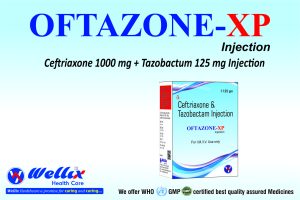
💉 OFTAZONE XP Injection – Dual Power for Severe & Resistant Infections
OFTAZONE XP is a potent combination of Ceftriaxone 1000 mg and Tazobactam 125 mg, designed to provide broad-spectrum antibacterial action with exceptional stability against beta-lactamase-producing bacteria. This synergistic blend is highly effective in treating severe, complicated, and resistant bacterial infections in both hospital and community settings.
By combining a third-generation cephalosporin (Ceftriaxone) with a beta-lactamase inhibitor (Tazobactam), OFTAZONE XP ensures maximum bacterial eradication, even against strains that are resistant to standard antibiotics.
🌟 Key Benefits of OFTAZONE XP
🛡 Unmatched Beta-Lactamase Stability – Effective against penicillin- and cephalosporin-resistant strains
⚡ Broad-Spectrum Coverage – Targets both gram-positive and gram-negative bacteria
🏥 Post-Surgical Infection Prevention – Superior efficacy in preventing local and systemic infections
🔄 Enhanced Potency – Tazobactam inhibits bacterial enzymes, allowing ceftriaxone to work more effectively
🧠 Excellent Tissue Penetration – Achieves high concentration in CSF and tissue fluids
💪 Ideal for Severe & Resistant Cases – Works where many other antibiotics fail
🔬 How OFTAZONE XP Works
Ceftriaxone
A third-generation cephalosporin with strong bactericidal action.
Inhibits bacterial cell wall synthesis, causing rapid bacterial death.
Stable against most beta-lactamases produced by gram-positive and gram-negative bacteria.
Tazobactam
A penicillanic acid sulfone derivative that inhibits beta-lactamase enzymes.
Protects ceftriaxone from degradation, extending its antibacterial spectrum.
Improves clinical outcomes in resistant infections.
🩺 Indications – When to Use OFTAZONE XP
🫁 Respiratory Tract Infections – Pneumonia, bronchitis
🩸 Septicemia – Bloodstream infections
🧠 Meningitis – Including resistant bacterial meningitis
🩻 Bone & Joint Infections – Osteomyelitis, septic arthritis
🩹 Skin & Soft Tissue Infections – Cellulitis, wound infections
🏥 Nosocomial Infections – Hospital-acquired resistant infections
🚺 Gynecological Infections – Pelvic inflammatory disease, post-surgical infections
🩺 Intrabdominal Infections – Peritonitis, appendicitis, abscesses
🦠 Sexually Transmitted Diseases – Gonorrhea and other susceptible STDs
🛡 Post-Operative Prophylaxis – Prevention of surgical site infections
📋 Dosage & Administration
| Form | Injection (IV/IM) |
|---|---|
| Dosage | As per severity, typically 1–2 g once daily or divided doses |
| Route | Intravenous (IV) or Intramuscular (IM) |
| Duration | Determined by infection type & severity |
Important: Always administer under medical supervision. Dosage adjustments may be necessary in patients with renal impairment.
⚠️ Precautions
Do not use in patients allergic to cephalosporins or penicillin
Use with caution in renal or hepatic dysfunction
Monitor for allergic reactions, especially in patients with a history of hypersensitivity
Prolonged use may lead to secondary infections like C. difficile colitis
Safe use during pregnancy and lactation should be based on risk-benefit assessment
📦 Product Information
| Composition | Ceftriaxone 1000 mg + Tazobactam 125 mg |
|---|---|
| Form | Sterile Injection |
| Pack Size | Vial with sterile water for injection |
| Shelf Life | 24 months from date of manufacture |
| Storage | Store in a cool, dry place below 25°C |
🙋 Frequently Asked Questions (FAQs)
❓ How is OFTAZONE XP better than Ceftriaxone alone?
The addition of Tazobactam inhibits beta-lactamase enzymes, making OFTAZONE XP effective against resistant bacterial strains that would otherwise degrade ceftriaxone.
❓ Can it be used for hospital-acquired infections?
Yes. OFTAZONE XP is specifically effective in nosocomial and multi-drug resistant infections.
❓ How quickly does it work?
Patients often experience clinical improvement within 48–72 hours of therapy, depending on infection severity.
❓ Is it safe for meningitis?
Yes. It achieves high CSF concentrations, making it suitable for treating bacterial meningitis.
❓ Can it be used in children?
Yes, under pediatric guidance, with weight-based dosing.
❓ Are there side effects?
Possible mild effects include diarrhea, nausea, injection site pain, or rash. Rarely, allergic reactions may occur.

user –
Excellent product